Stay Cool
A social norms marketing campaign designed to redefine what it means to be “cool” for middle school students in Wakulla County.
Client
The Florida Center for Prevention Research
Year
2025
Role
Brand Strategy
Campaign Development
Research
Graphic Design
Research
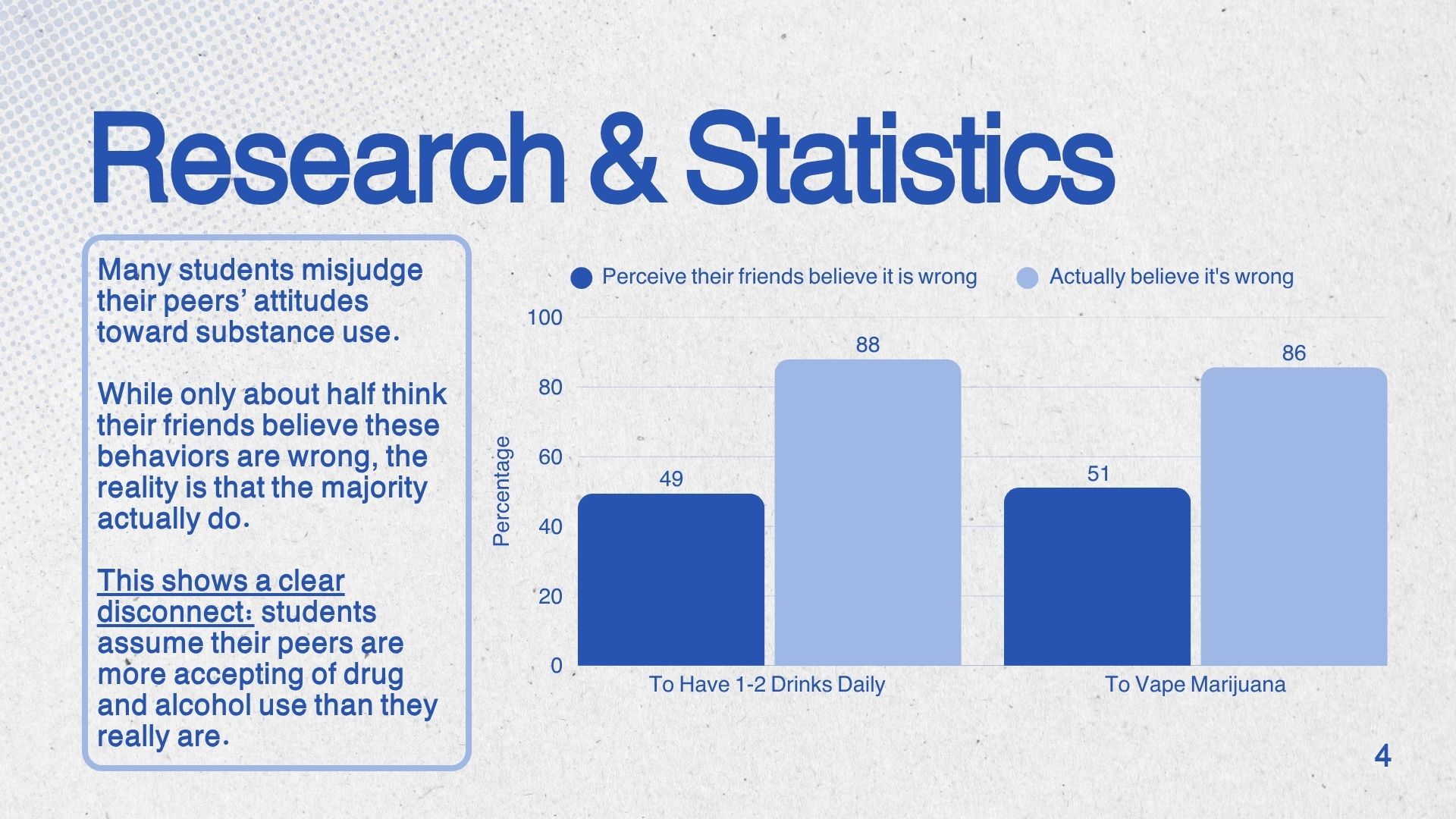
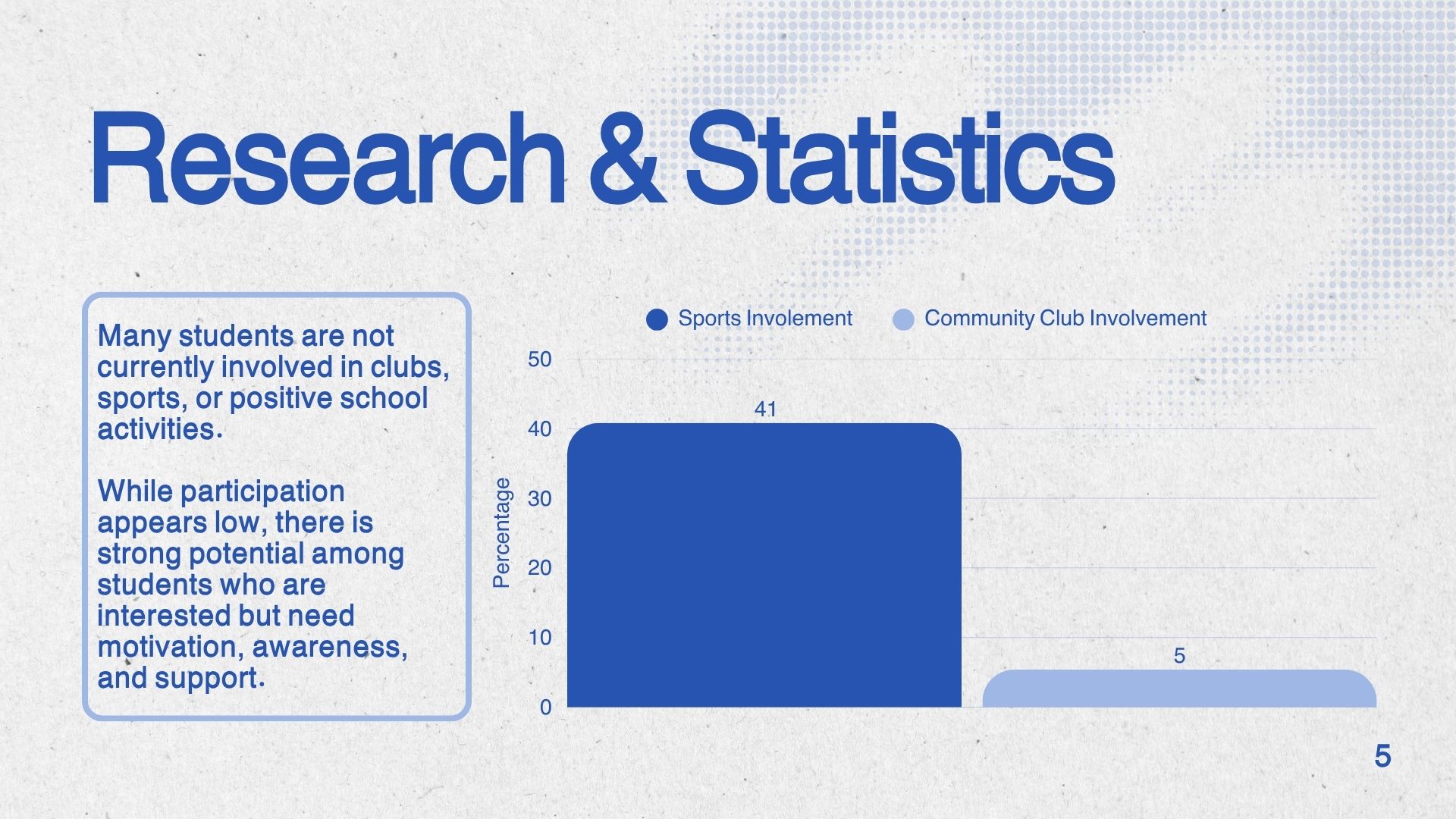
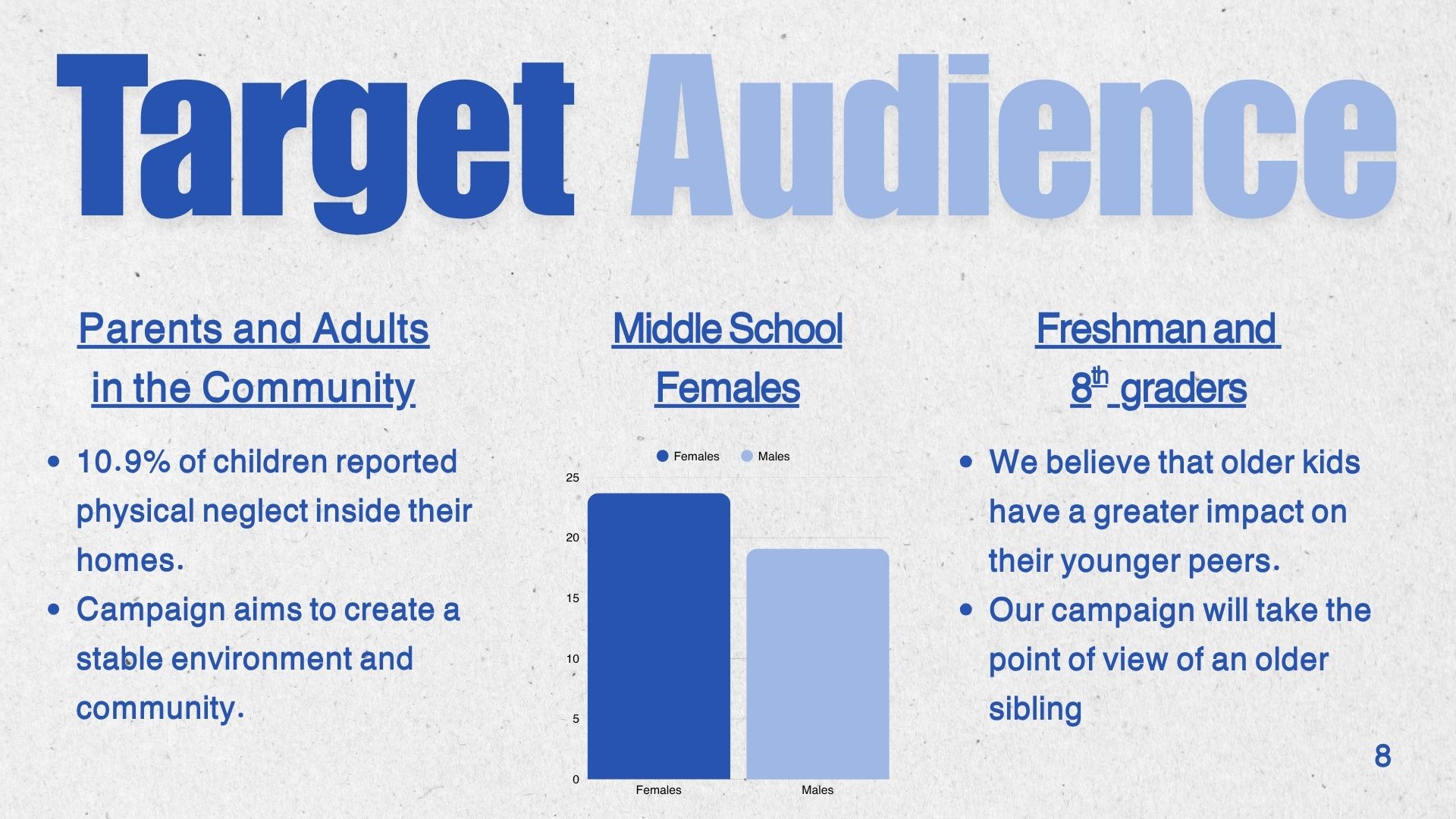
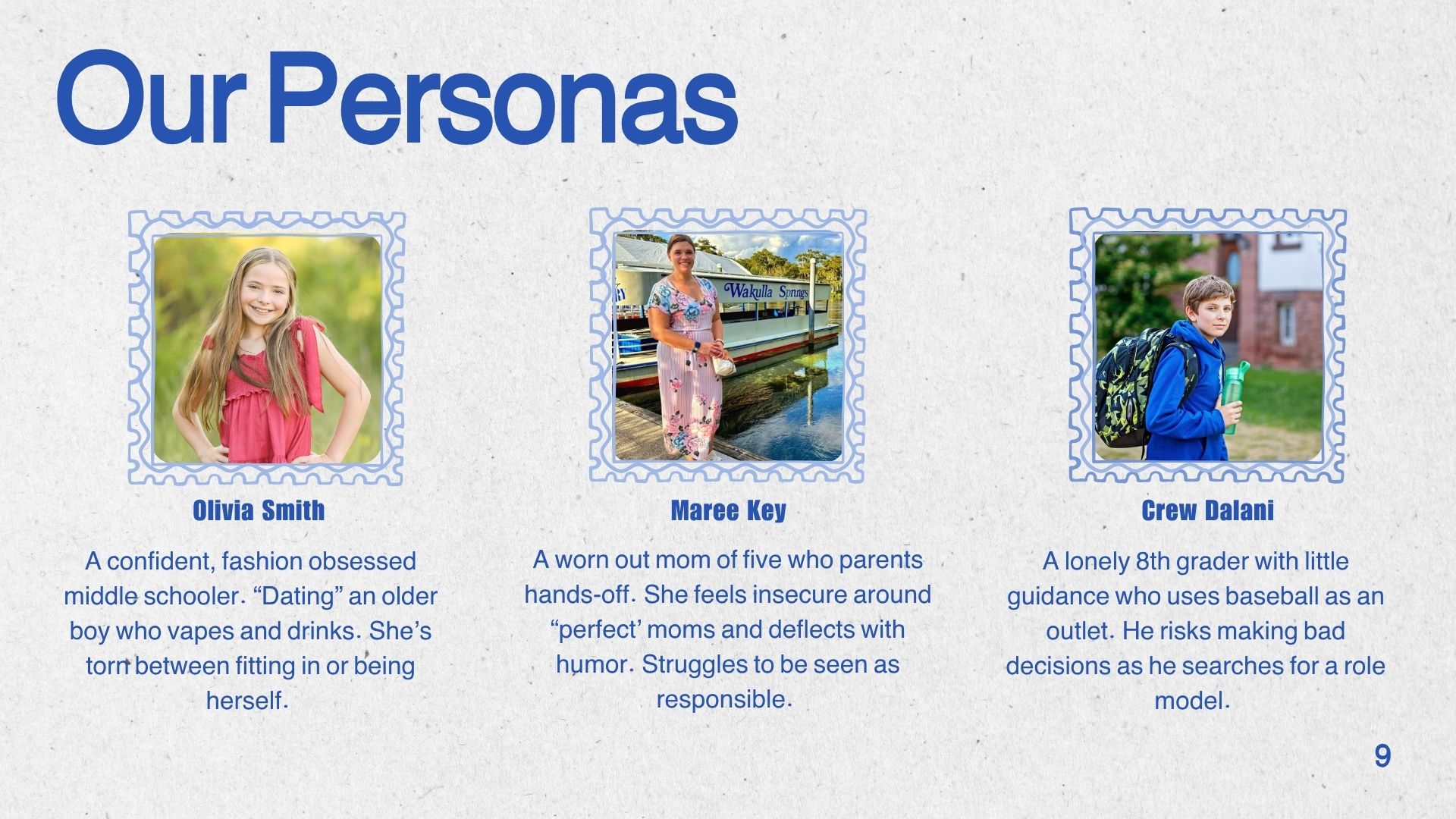
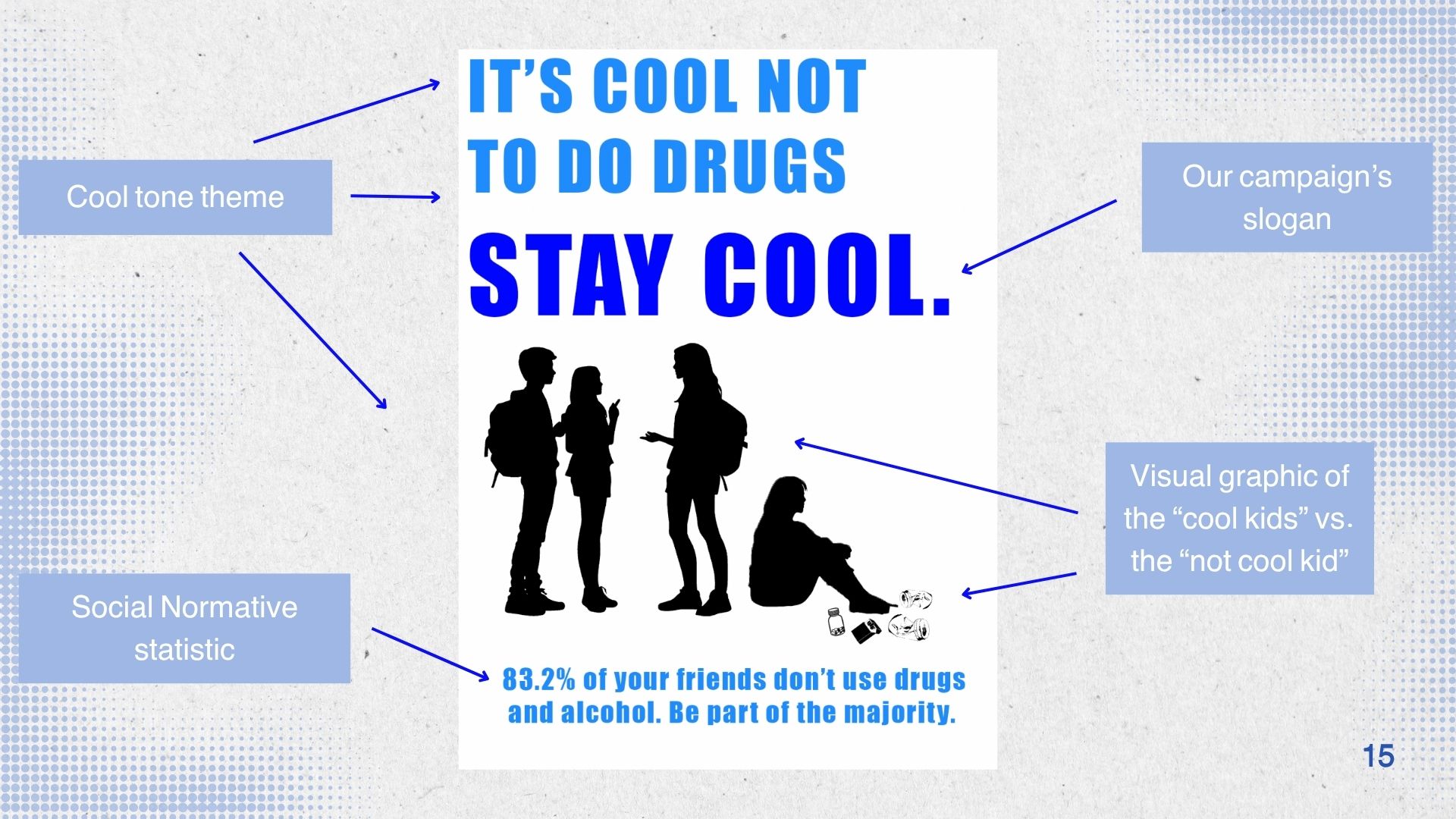
Every successful campaign begins with understanding the target audience. Because Wakulla County had opted out of the Florida Youth Substance Abuse Survey, our team relied on national research, behavioral studies, and social norms marketing principles to identify the misconceptions surrounding youth substance use. We analyzed demographic data, audience behaviors, parental influence, and existing prevention campaigns to better understand how middle school students define social acceptance and what motivates positive decision making.This research revealed a significant disconnect between students' perceptions and reality. While many believed alcohol and marijuana use were more common than they actually were, the majority of students made healthy choices. That insight became the foundation of our campaign strategy.
Strategy
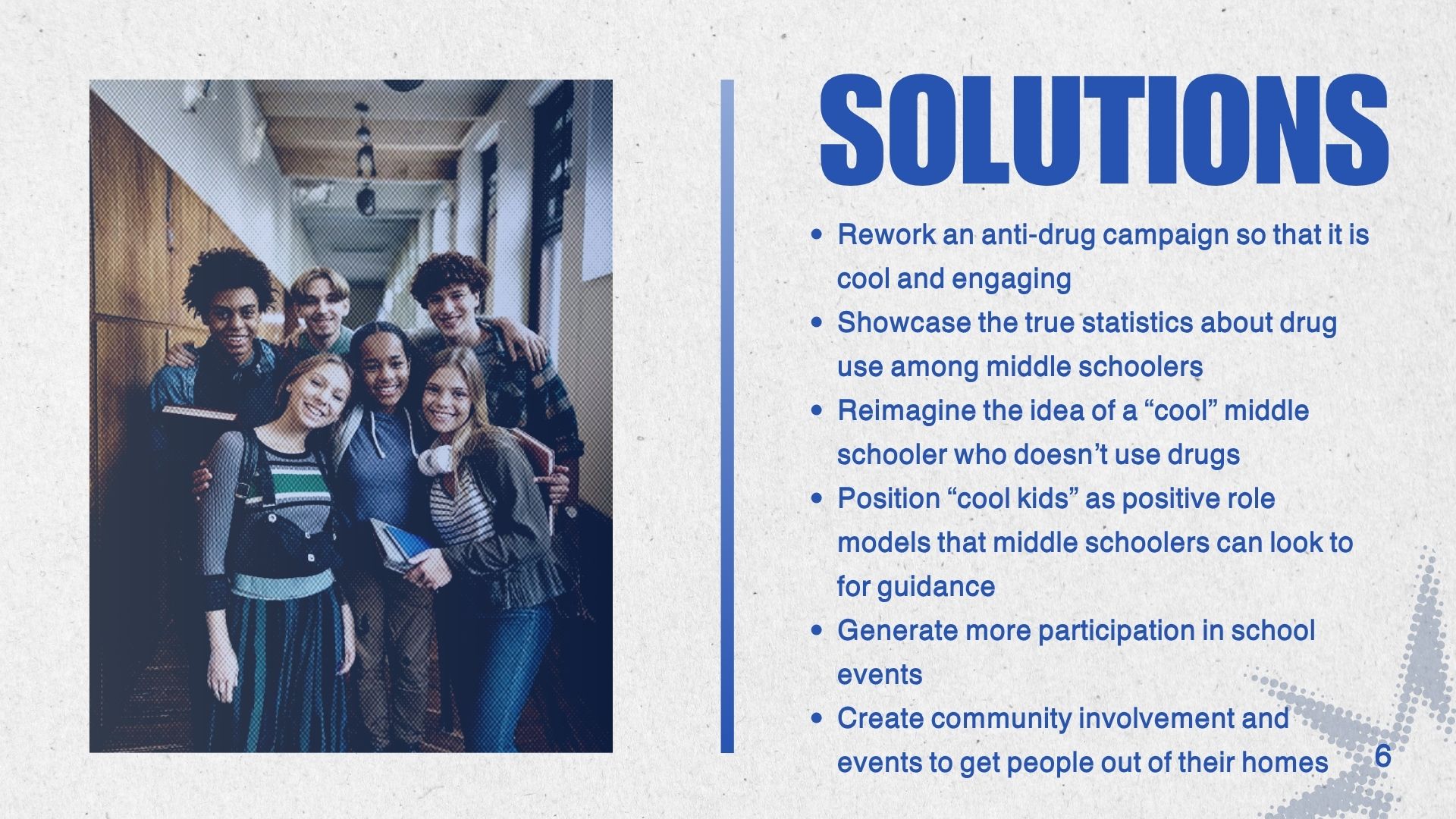
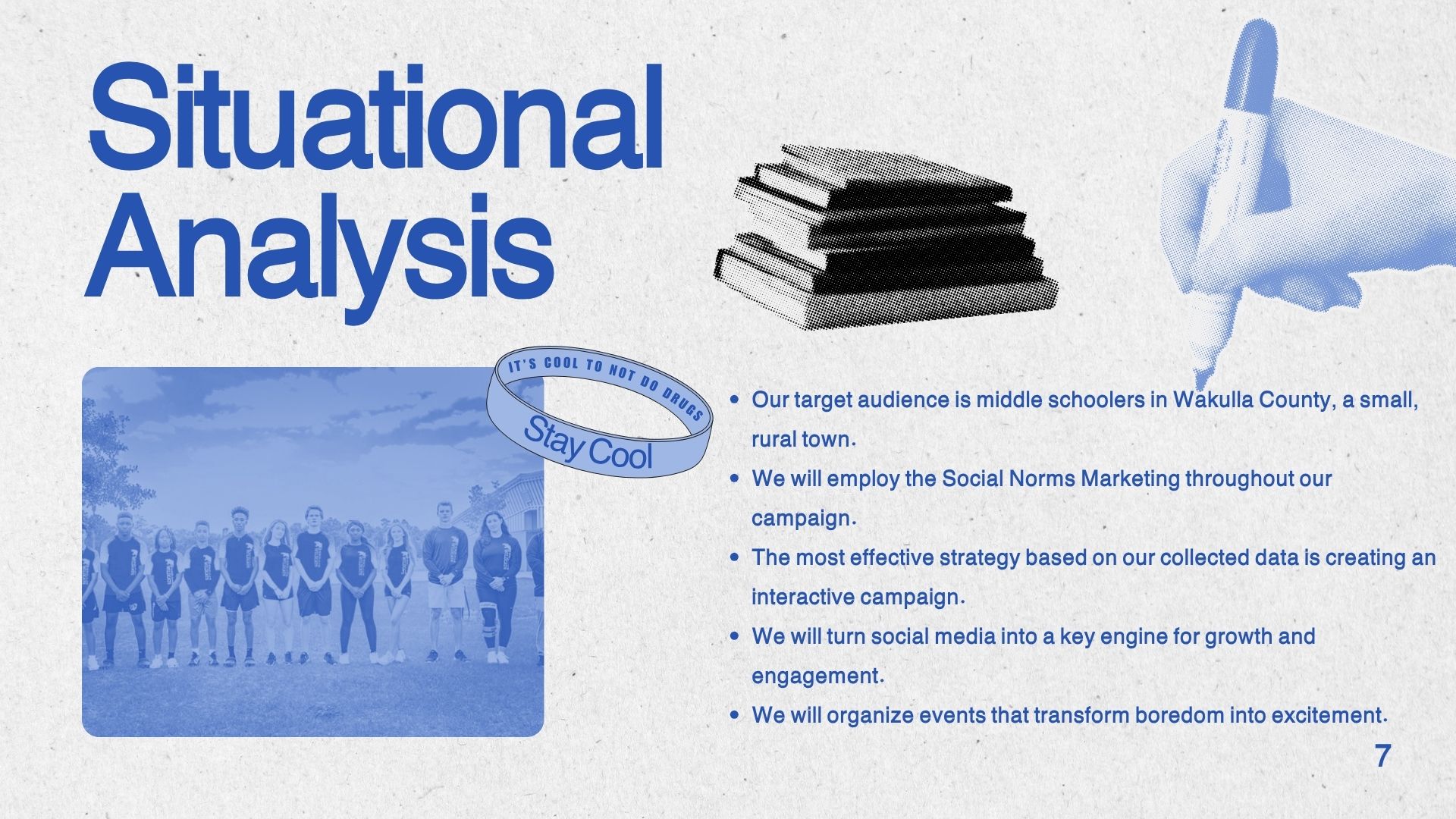
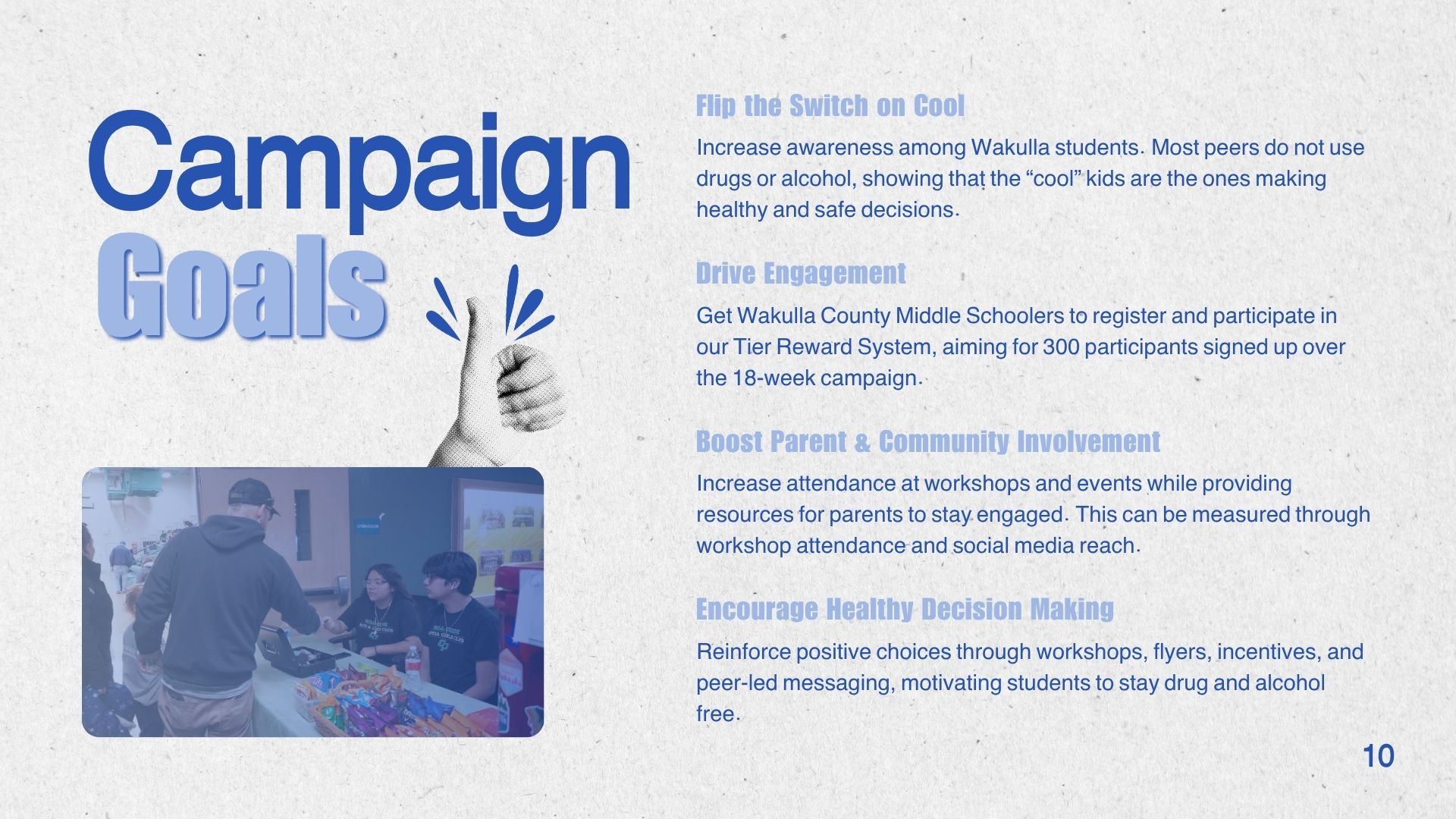
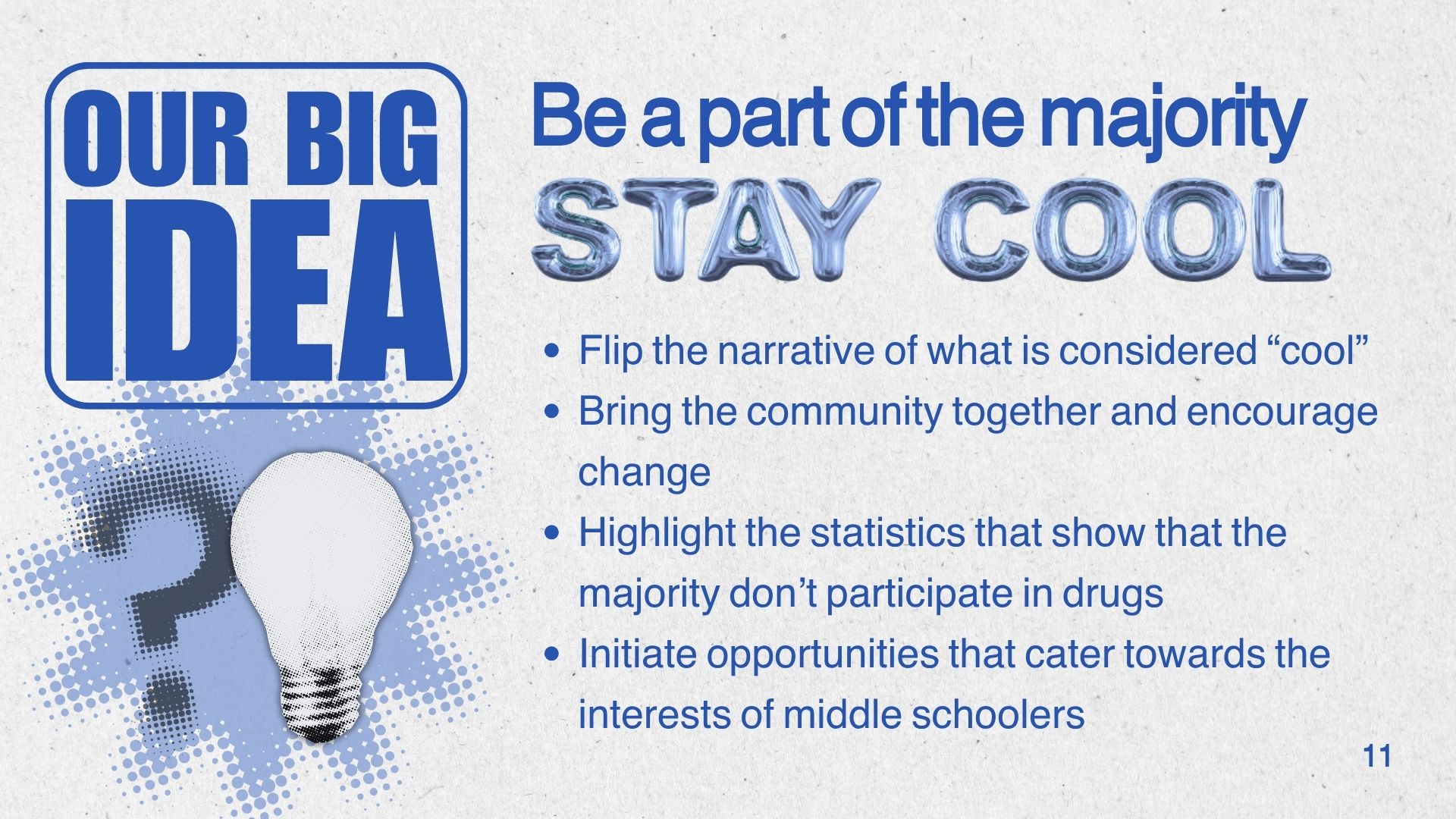
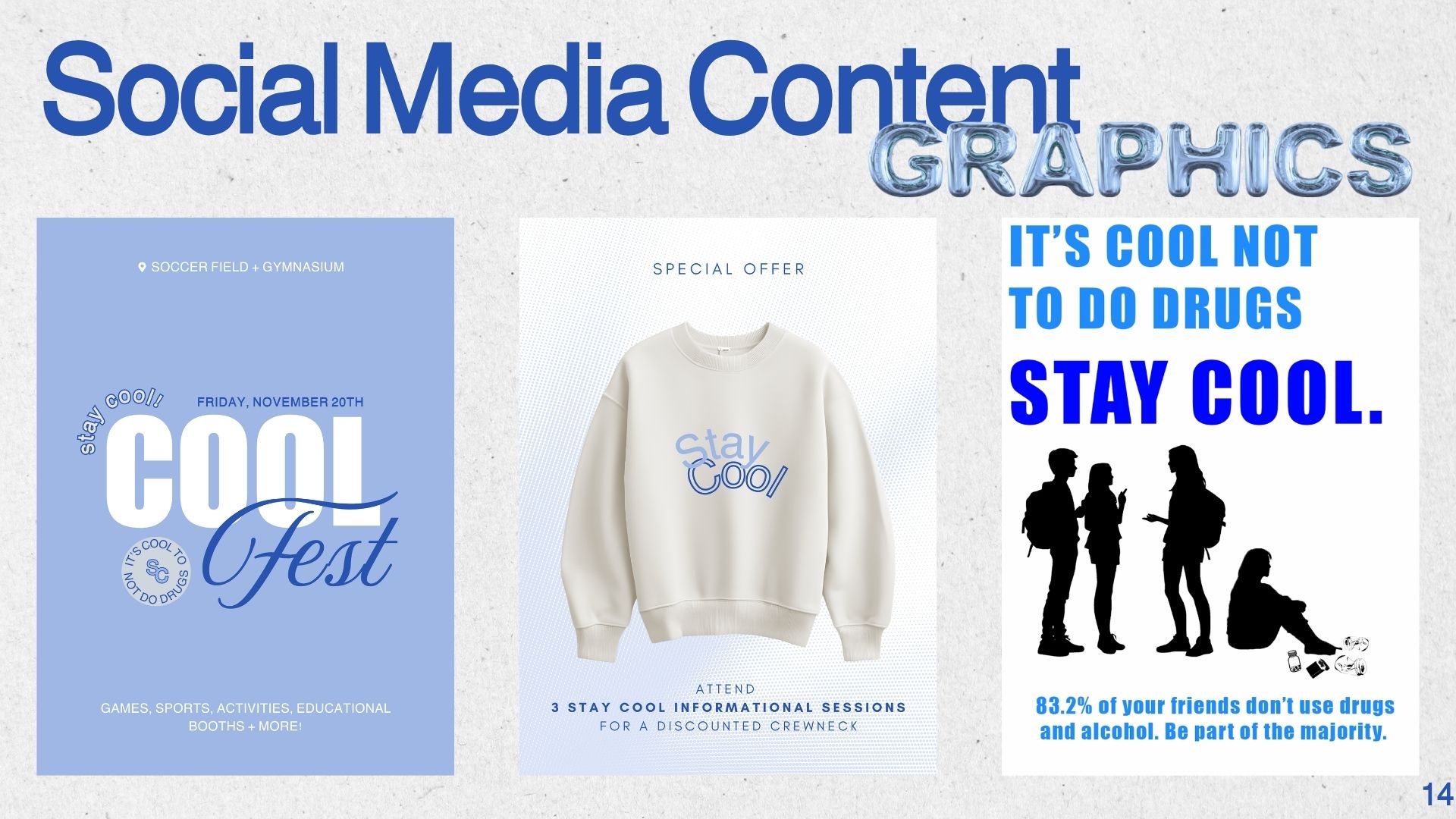
Our goal was not to tell students what not to do. Instead, we wanted to redefine what it means to be cool. Rather than relying on fear based messaging, we developed a positive social norms campaign that highlighted healthy choices as the majority behavior. The Stay Cool concept positioned confidence, leadership, and positive decision making as qualities worth celebrating. Every creative decision, from the campaign identity and messaging to the visual style and communication channels, was designed to feel approachable, modern, and relevant to middle school students while remaining informative for parents and educators.
Execution
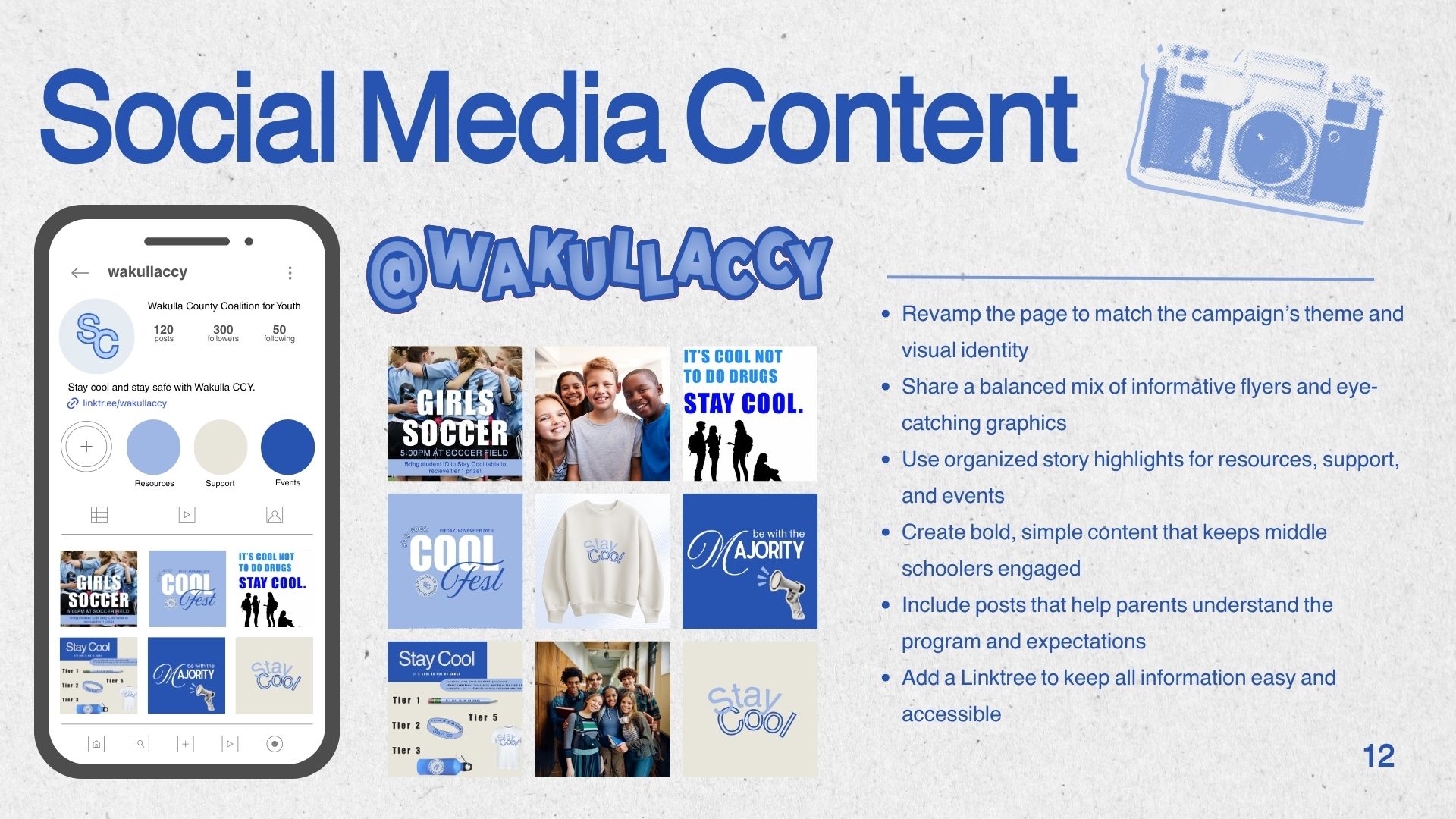
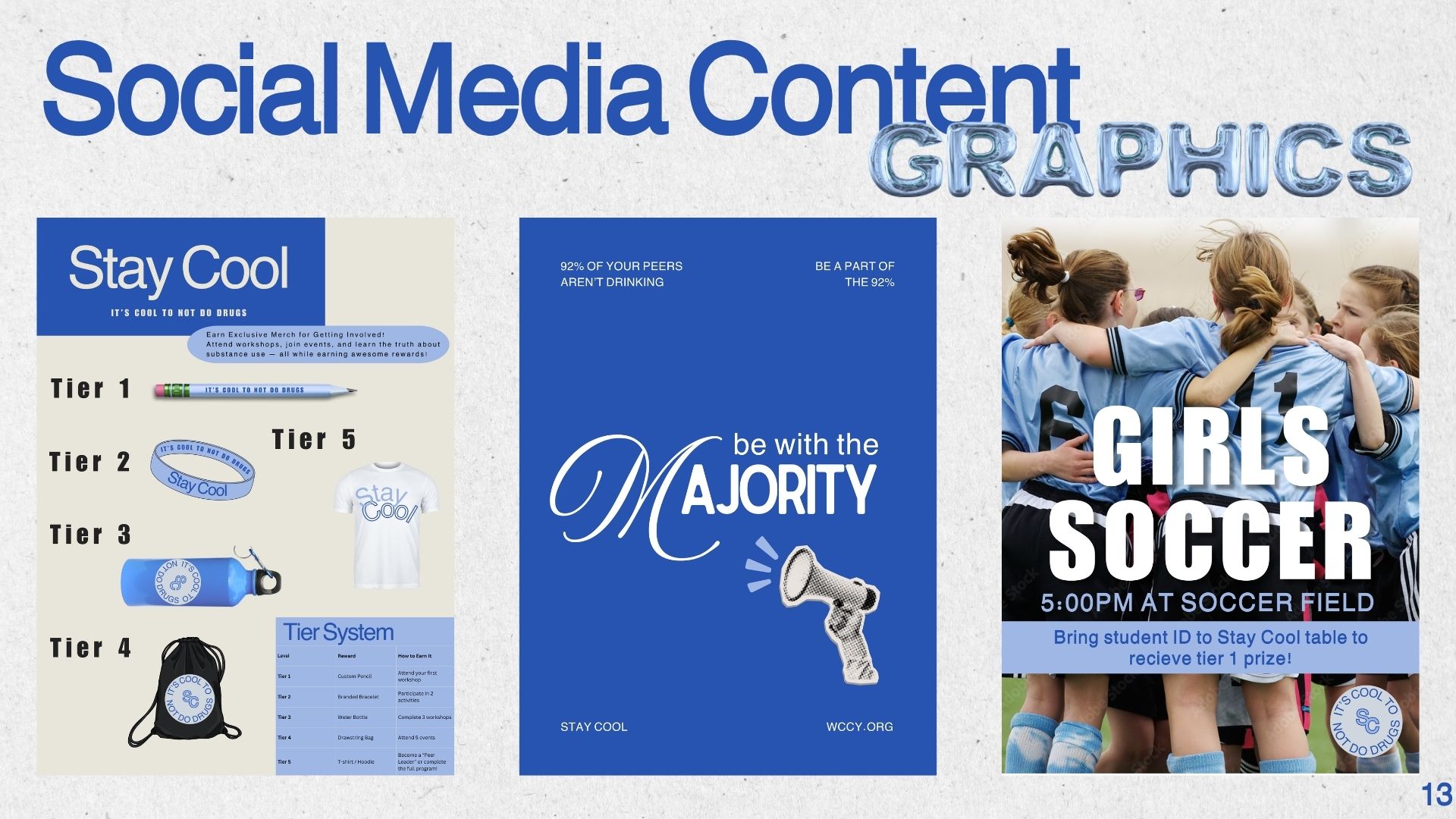
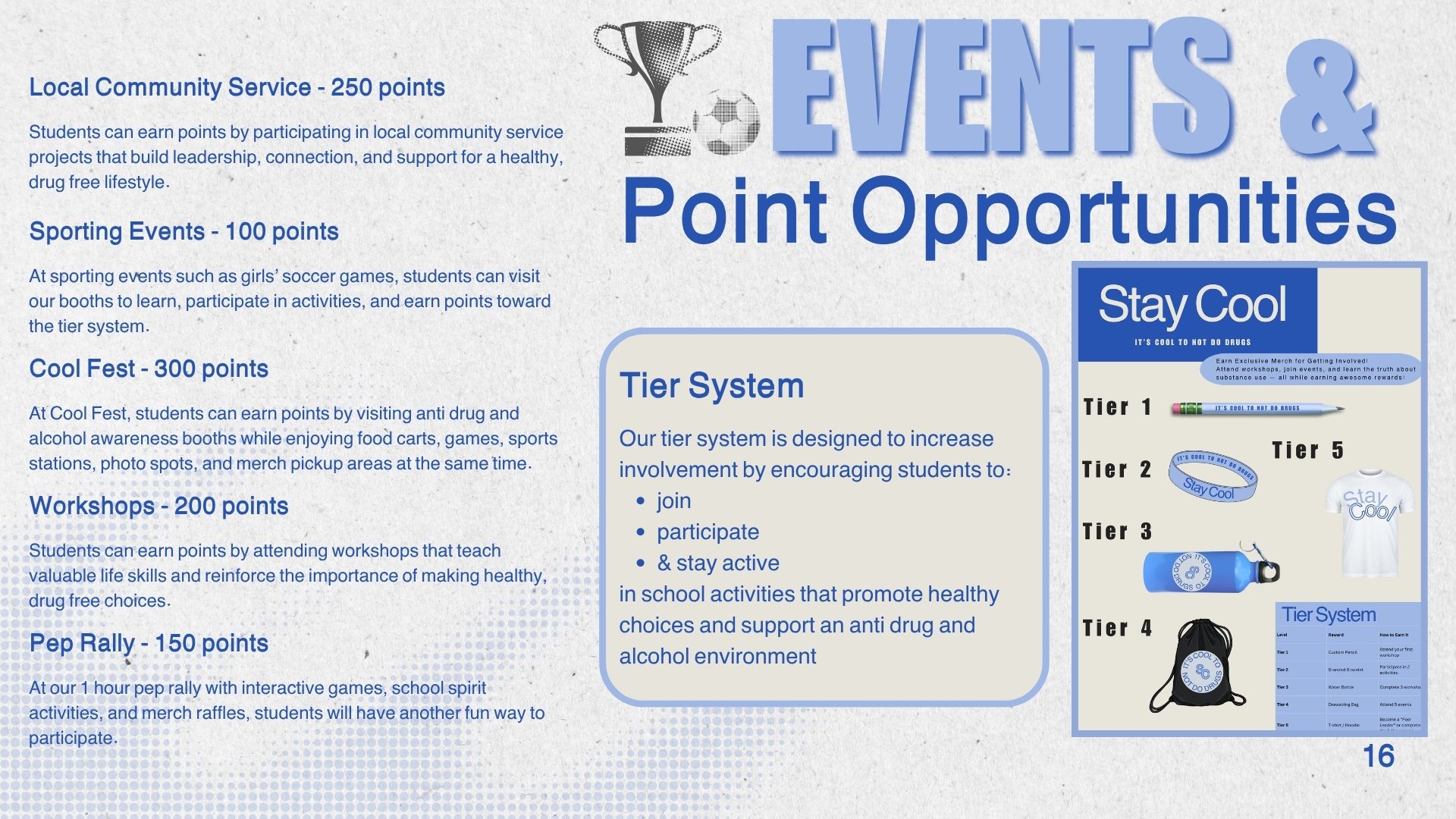
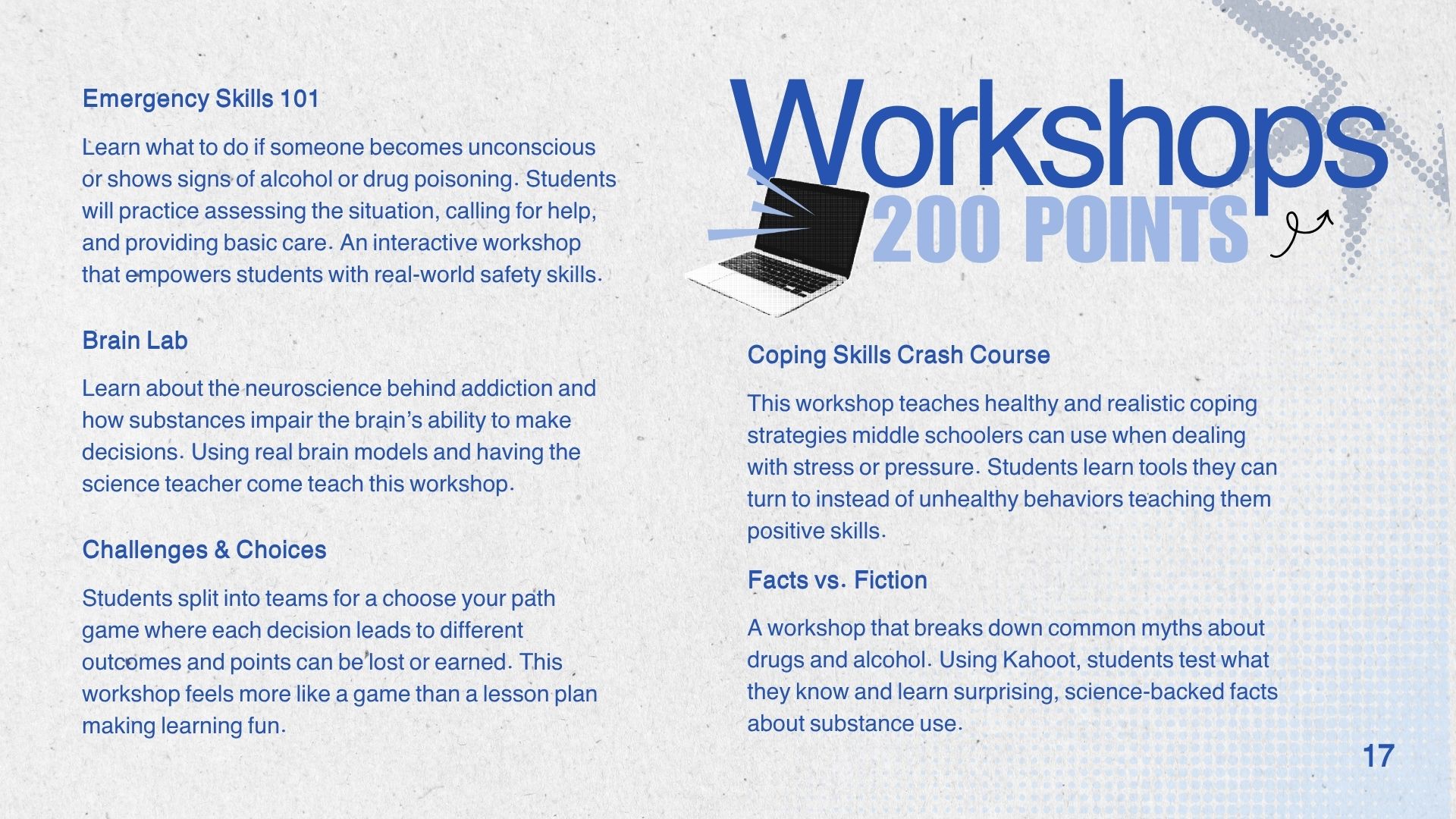
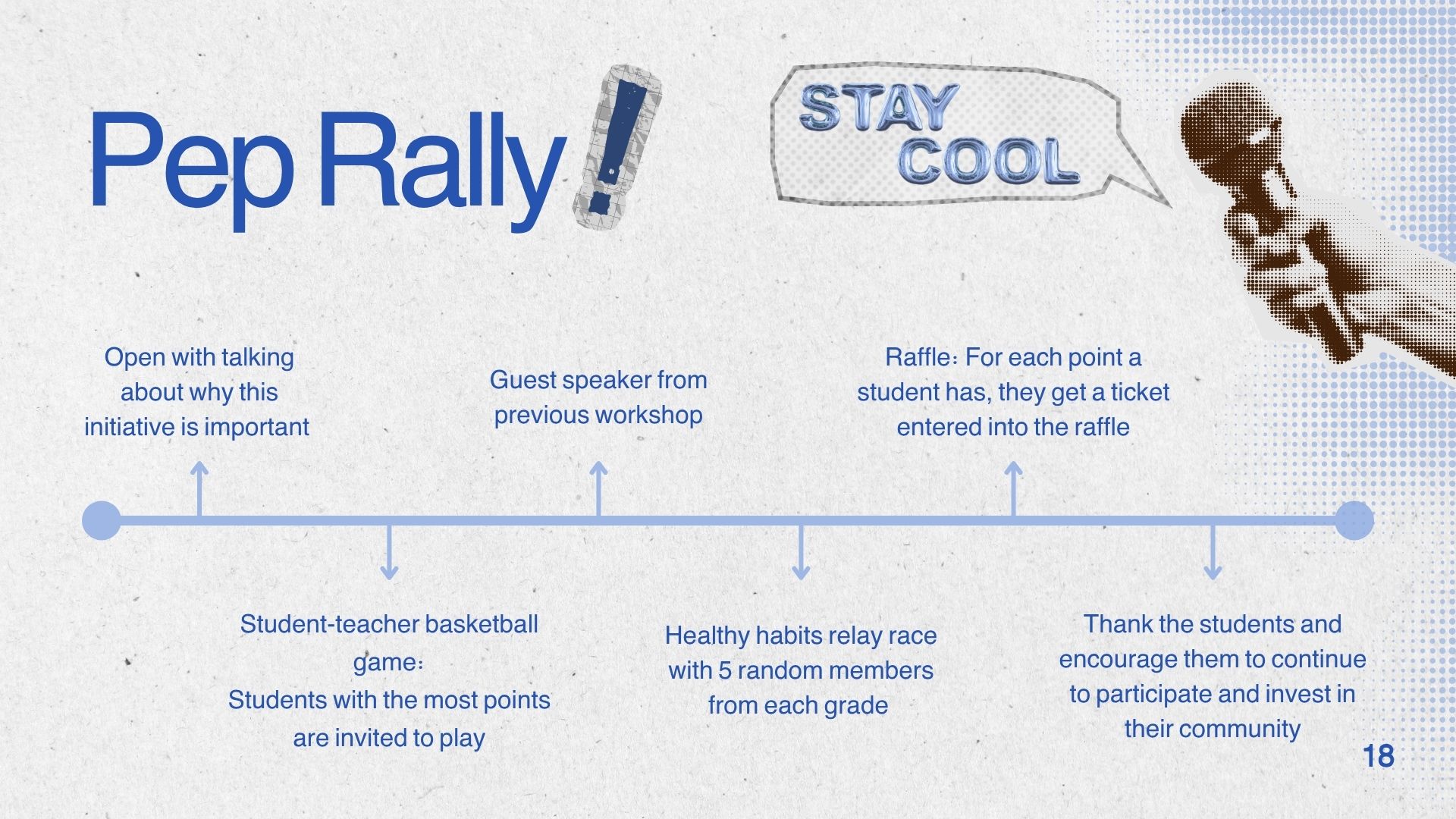
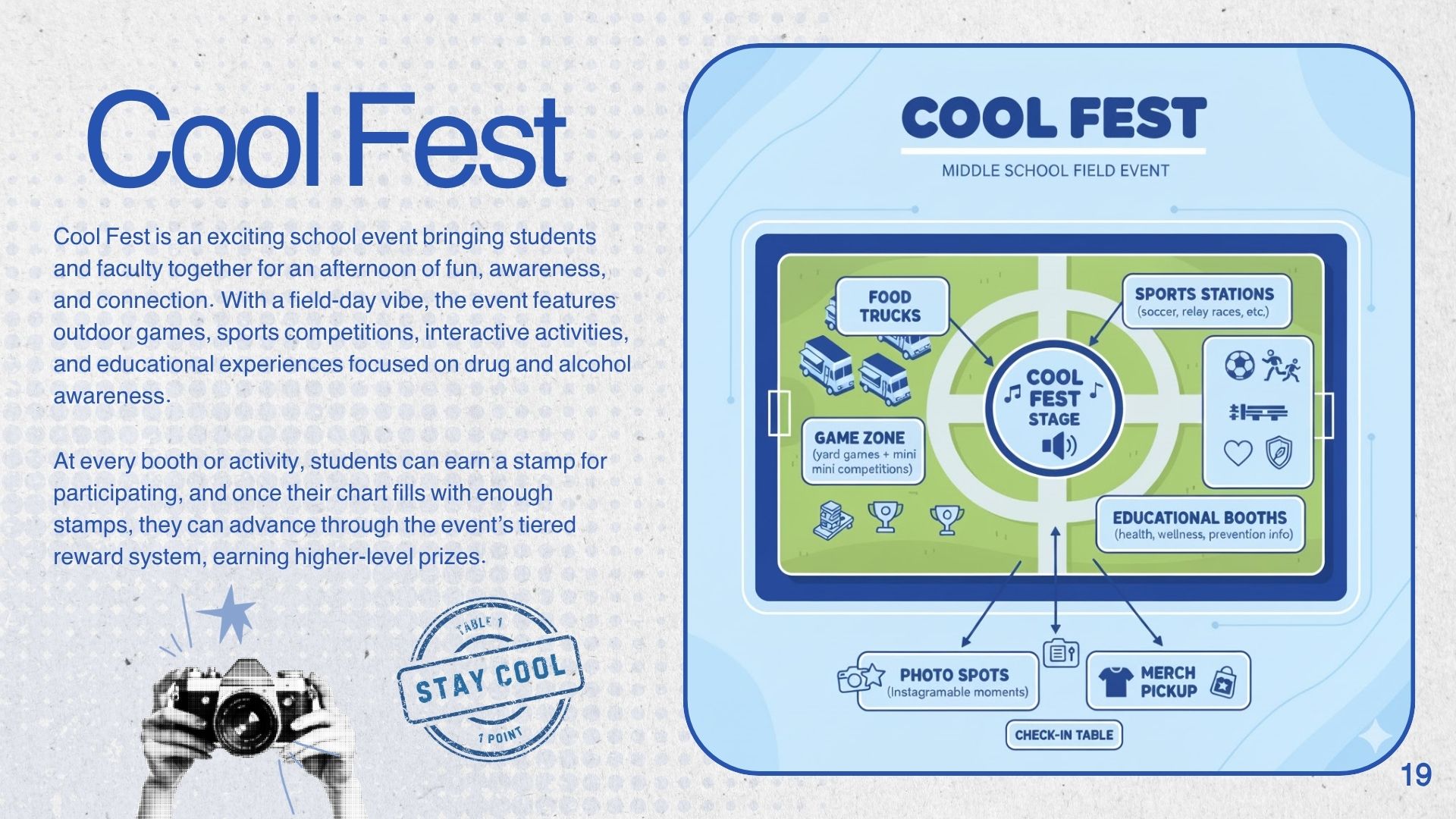
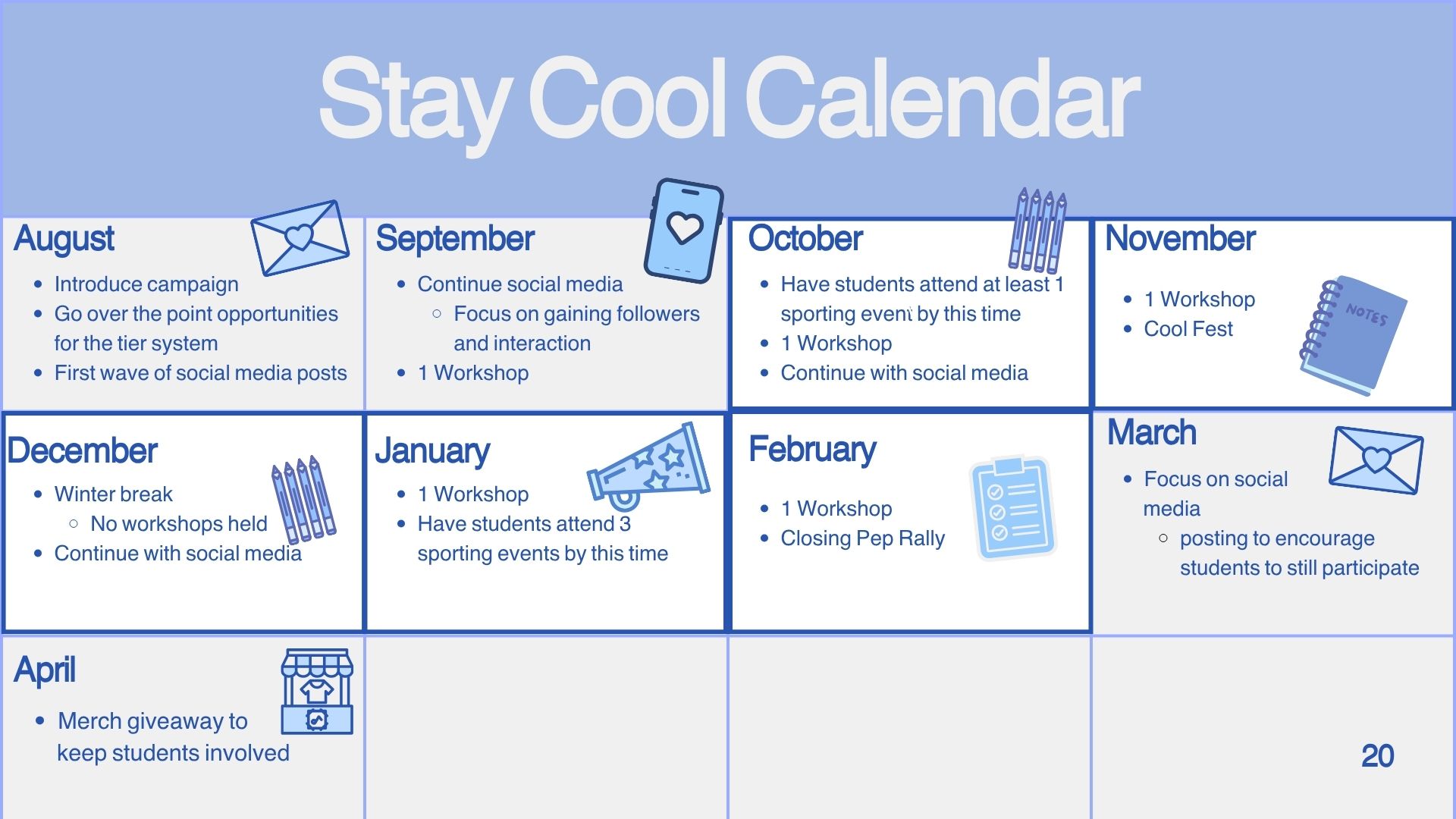
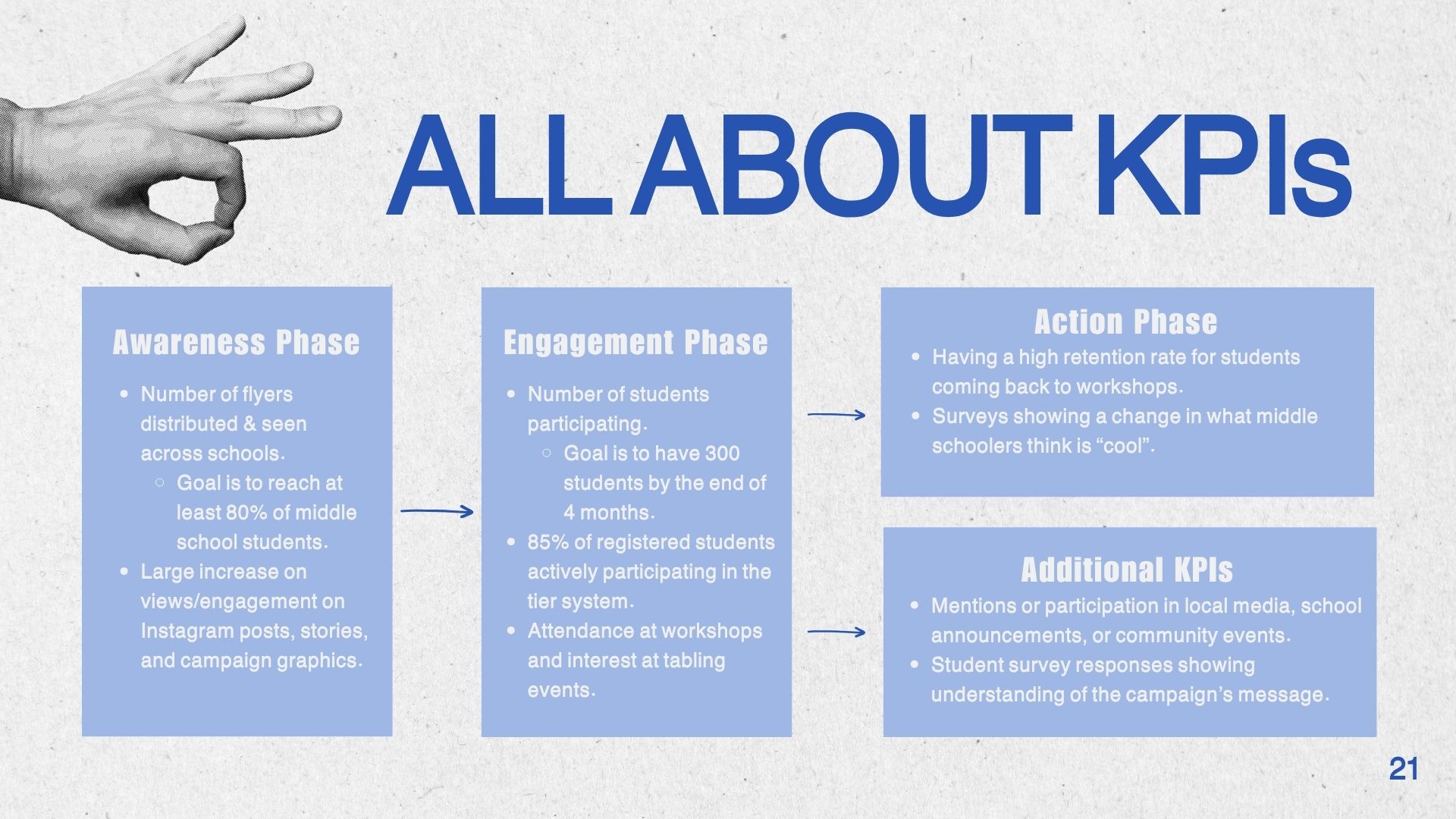
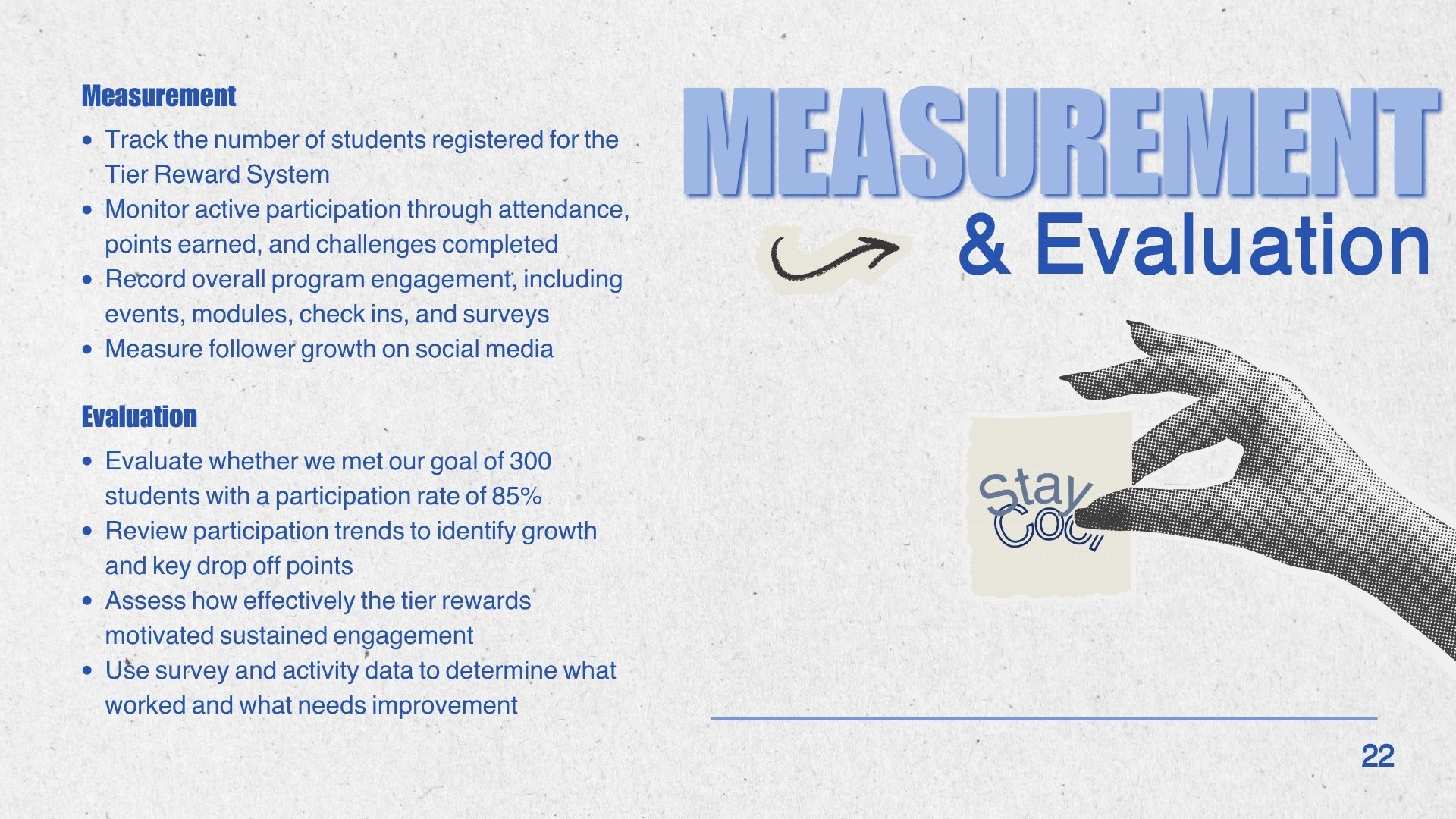
To bring the strategy to life, we developed an integrated campaign that extended beyond traditional awareness messaging. The campaign included social media content, educational workshops, school activations, promotional materials, and a reward system that encouraged continued participation throughout the school year. By combining digital communication with in person experiences, we created multiple opportunities for students to engage with the campaign in meaningful ways. Each touchpoint reinforced the same message that making healthy decisions is something to be proud of.
Results & Takeaways
Although this campaign was developed as a strategic proposal, it strengthened my ability to approach marketing challenges through research, audience insight, and purposeful creative thinking. It reinforced the importance of building campaigns that begin with data, translate those insights into a clear strategy, and execute consistently across every audience touchpoint. This project challenged me to think beyond visual design and consider how research, branding, messaging, and community engagement work together to influence behavior. It remains one of the projects that best represents my approach to developing thoughtful, research driven marketing strategies.